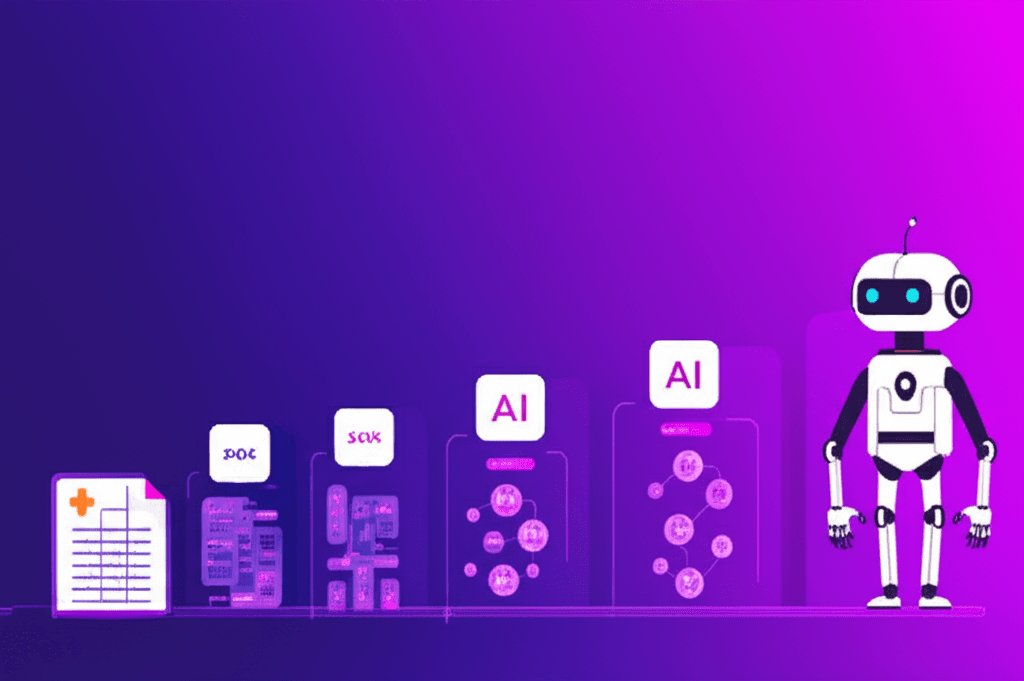
AI Ad Management in 2026: From Manual to Autonomous
The Manual Era (2000-2015): Spreadsheets and Gut Feeling
For the first fifteen years of digital advertising, campaign management was entirely manual. PPC managers lived in spreadsheets, adjusting bids keyword by keyword, writing ad copy variation by variation, and pulling search term reports that took hours to analyze.
The skill set was part analytical, part artistic, and mostly about patience. A skilled PPC manager could handle 3-5 accounts effectively. Agencies charged premium rates because the work was genuinely labor-intensive — a thorough account audit could take a full week, and optimization was a continuous, manual process.
The biggest challenge was scale. As Google Ads grew more complex — adding more campaign types, targeting options, and bidding strategies — the number of decisions required per account grew exponentially. By 2015, a moderately complex account could have thousands of keywords, hundreds of ad variations, and dozens of audience segments. Manual management was hitting its ceiling.
The Rule-Based Era (2015-2020): Scripts and Automation Rules
The first wave of automation came through Google Ads Scripts and automated rules. Instead of manually checking bid performance every day, you could write a script: "If keyword CPA exceeds $50, reduce bid by 15%." Instead of manually monitoring budgets, you could set a rule: "Increase daily budget by 20% if CTR exceeds 5%."
This was a significant productivity boost. A PPC manager with well-configured scripts and rules could effectively manage 10-15 accounts. The work shifted from execution to system design — building and maintaining the rules rather than manually executing optimizations.
The limitation of rule-based automation is rigidity. Rules execute exactly as defined, regardless of context. A rule that pauses keywords with zero conversions cannot distinguish between a keyword that will never convert and one that just launched last week. Rules do not understand seasonality, competitive shifts, or nuance. They are powerful but brittle.
Third-party tools like Optmyzr and Adalysis made rule-based automation more accessible with visual rule builders. But the fundamental limitation remained: you had to anticipate every scenario in advance and encode it as a rule.
The AI-Assisted Era (2020-2024): Smart Bidding and Recommendations
Google's introduction of Smart Bidding marked the transition to AI-assisted management. Instead of rules that you define, machine learning models analyze auction-time signals — device, location, time, audience, query context — and set bids automatically to optimize for your goal.
Smart Bidding was a paradigm shift. For the first time, advertisers could leverage signals they could not even access — Google's real-time prediction of conversion probability for each individual auction. The results spoke for themselves: properly implemented Smart Bidding consistently outperformed manual bidding for accounts with sufficient conversion data.
This era also brought AI-powered recommendations. Google started suggesting optimizations — add these keywords, try this bidding strategy, increase this budget. Third-party tools followed with their own recommendation engines, analyzing account data and surfacing opportunities.
The limitation was that AI assisted humans but did not replace them. You still needed to evaluate every recommendation, make judgment calls about which suggestions to implement, and manage the strategic direction. AI was a co-pilot, not an autopilot.
The Autonomous Era (2025-Present): AI Agents and MCP
We are now in the early stages of autonomous ad management. The defining technology is the Model Context Protocol (MCP), which gives AI models direct access to advertising platforms. For the first time, an AI does not just recommend actions — it can execute them.
The difference between AI-assisted and autonomous is agency. An AI assistant waits for you to ask a question and then provides an answer. An AI agent monitors your account proactively, identifies issues and opportunities, evaluates options, and takes action — notifying you of what it did rather than asking what to do.
Current-generation AI agents operate in a supervised autonomous mode. They can analyze data, generate recommendations, and execute routine optimizations, but they escalate to humans for strategic decisions, unusual situations, and high-impact changes. This hybrid approach delivers the speed of automation with the judgment of human oversight.
AdWhiz represents this approach. Through its 59 MCP tools, AI assistants like Claude can manage Google Ads and Meta Ads accounts with minimal human intervention, while maintaining safety guardrails — new campaigns start paused, and every change is logged and reversible. See our setup guide to experience this workflow firsthand.
MCP and the Future of Ad Management
The Model Context Protocol is the enabling technology for the next decade of advertising. Here is why it matters:
- Platform agnosticism — MCP works across Google Ads, Meta Ads, and any future platform that builds an MCP server. One AI agent can manage campaigns across platforms, understanding the synergies and trade-offs between them.
- Composability — MCP tools can be chained together in creative ways. "Analyze my Google Ads search terms, find terms that would work well as Meta interests, and create a lookalike audience based on my top Google Ads converters." This cross-platform intelligence was impossible before MCP.
- Democratization — Small businesses that could never afford a PPC agency can now get agency-level optimization through an AI agent. The cost of managing advertising effectively is dropping by an order of magnitude.
- Speed — An AI agent can analyze an entire account, identify 50 optimization opportunities, and execute them in the time it takes a human to log into the dashboard. For time-sensitive optimizations (budget pacing, competitor responses, anomaly detection), speed matters enormously.
The trajectory is clear: within 2-3 years, autonomous AI agents will handle 80%+ of routine ad management tasks. The human role shifts from operator to strategist — setting goals, defining brand guidelines, approving creative direction, and overseeing agent performance.
Choosing the Right Level of AI for Your Business
Not every business needs (or is ready for) fully autonomous ad management. Here is how to match your automation level to your situation:
Just Starting Out ($500-$2,000/month)
Start with Google's built-in Smart Bidding and a monthly AI audit to catch obvious waste. At this spend level, the cost of sophisticated tools must be weighed against your budget. A free AdWhiz trial can identify your biggest opportunities without any ongoing cost.
Growing ($2,000-$10,000/month)
At this level, the ROI of AI tools becomes clear. A $79/month tool that reduces wasted spend by even 10% on a $5,000/month budget saves $500/month — a 6x return. Use MCP-powered management for daily monitoring, negative keyword automation, and bid optimization.
Scaling ($10,000-$50,000/month)
Multi-platform management, advanced audience strategies, and creative optimization become critical. Use AI agents for daily monitoring and routine optimizations while maintaining human oversight for strategic decisions and major budget changes.
Enterprise ($50,000+/month)
At enterprise scale, every percentage point of optimization represents significant revenue. Full AI agent deployment with cross-platform management, custom automation workflows, and API integrations is essential. The ROI of automation at this level is measured in hundreds of thousands of dollars annually.
AdWhiz's Approach: Human-in-the-Loop AI
AdWhiz is built on the principle that the best results come from combining AI speed with human judgment. Our approach:
- AI handles execution — Data analysis, bid optimization, negative keyword management, performance monitoring, and routine optimizations. These are tasks where AI is faster and more consistent than humans.
- Humans handle strategy — Goal setting, creative direction, budget allocation between channels, and approval of significant changes. These are decisions that require business context AI does not have.
- MCP enables both — Through the Model Context Protocol, you interact with AI in natural language. You set the direction, AI handles the execution, and you review the results. It is the optimal division of labor.
The future of ad management is not AI vs. humans. It is AI-empowered humans making better decisions faster. Start experiencing this future today with a free trial, or explore our subscription plans for full AI-powered management across Google Ads and Meta Ads.
相关文章
Google Ads Automation: The Complete 2026 Guide
Master every layer of Google Ads automation in 2026 — from Smart Bidding and automated rules to AI agents and MCP-powered management. Includes practical strategies and risk mitigation.
阅读更多Best AI Google Ads Tools in 2026: Complete Guide
Compare the top AI-powered Google Ads management tools for 2026. Detailed reviews of AdWhiz, Optmyzr, WordStream, GoMarble, Madgicx, and more — with pricing, features, and ideal use cases.
阅读更多What Is MCP? Model Context Protocol for Marketers
A plain-language guide to the Model Context Protocol (MCP) and why it matters for digital marketers. Learn how MCP connects AI assistants to your ad platforms for hands-free campaign management.
阅读更多